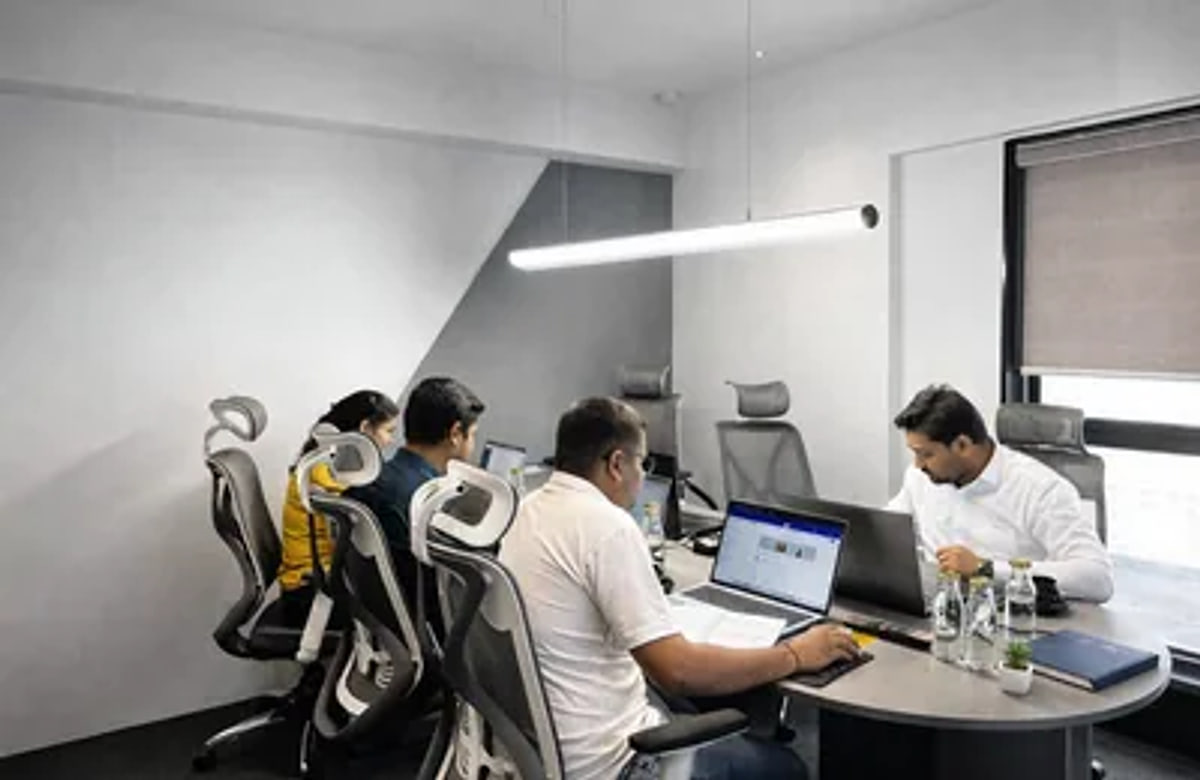
Ten years ago today, on June 12th 2016, we signed the lease on a small office in Surat and turned what had been two years of freelance work into a company with a name, a door, and a promise. We were a handful of engineers who shared one stubborn conviction: that most software fails not because the technology is hard, but because too many teams treat building it as a commodity rather than a craft. A decade later — 500+ projects, 25+ countries, and more late nights than any of us care to count — that conviction has only deepened. This is not a press release. It is an honest look back at how Sensussoft grew up: the bets that paid off, the mistakes we are glad we made early, and the people without whom none of it would exist.
It Started With a Frustration (2014)
Before there was a company, there was an irritation we could not shake. The founding team had spent years inside larger IT consultancies and product companies, and we kept watching the same pattern: businesses underserved by partners who optimized for billable hours over outcomes, who shipped bloated projects late, and who treated the client's problem as someone else's. In 2014 we started taking on freelance work on the side — nights, weekends, whatever we could find — not to build an empire, but to prove to ourselves that software could be delivered differently. Those first projects were small and the margins were thin, but they taught us the lesson the whole company would later be built on: clients do not buy code, they buy a result, and the result is the only thing that counts.

- The freelance years were the real apprenticeship — every project was a referendum on whether we could be trusted
- We learned to scope honestly, because over-promising on a freelance budget bankrupts you fast
- The habit of writing the result down first — before the code — started here and never left
Planting a Flag in Surat (2016)
By 2016 the side work had outgrown the side. We made the decision that every founder eventually faces: stop hedging, and commit. We opened our first proper office in Surat, India, hired the first engineers who were not founders, and started calling ourselves Sensussoft out loud. Surat is not the obvious place to start a global software consultancy — it is a city better known for textiles and diamonds than distributed systems — and that was part of the point. We believed world-class engineering did not require a Silicon Valley zip code, only world-class standards and the discipline to hold them. Our first hires took a bet on an unproven company in an unproven city, and we have never forgotten it.
- June 12th 2016 — the official founding date we celebrate today
- The first non-founder hires defined the culture more than any handbook could
- We set a rule early: the bar for the work leaving our door is the same whether the client is a startup or a Fortune 500
Learning to Say No
The most counterintuitive thing we learned in our first few years was that growth and saying yes are not the same thing. Early on, we said yes to almost everything — every project, every timeline, every "can you also just…". It nearly broke us. The turning point came when we realized that the projects we regretted were almost always the ones we should have declined: misaligned expectations, a client who wanted a body-shop and not a partner, a timeline that could only be met by cutting the corners we exist to not cut. So we learned to say no — to work that did not fit, to shortcuts that would embarrass us later, and to the temptation to be everything to everyone. Saying no to the wrong work is how we protected our ability to do the right work well. It remains, to this day, one of the most important things we do.

- A declined project is cheaper than a rescued one — we learned this the expensive way
- Fit matters more than fee: a misaligned client is a loss even at a good rate
- Protecting the team's focus is protecting the client's outcome
The Projects That Shaped Us
Over the decade we have delivered more than 500 projects for over 200 organizations across 25+ countries — SaaS platforms, enterprise automation systems, healthcare applications, mobile products, and lately, a great deal of AI. The numbers are nice, but the projects we are proudest of are not the biggest ones; they are the ones where we changed how a business actually worked. The logistics platform that turned a spreadsheet-and-prayer operation into something that scaled. The healthcare app that had to be right because being wrong meant a clinician got bad information. The migration that everyone said was too risky, that we did anyway, carefully, and that held. Each of those taught us something we carried into the next, which is the quiet compounding advantage of doing this for ten years: very little is genuinely new to us anymore.
- 500+ projects, 200+ organizations, 25+ countries — but the metric we trust most is repeat clients
- The hardest projects taught the most; the calm ones funded the learning
- A decade of pattern-matching means fewer surprises and faster, safer delivery
Riding the AI Wave Without Losing the Plot (2023–2026)
The last three years rewrote our industry. Generative AI, coding agents, retrieval systems, the Model Context Protocol — the pace of change since 2023 has been faster than the previous seven years combined. We leaned in hard: AI is now woven through how we build and what we build for clients. But the decade gave us something the hype cycle could not, which was the judgment to tell the difference between a tool and a toy. We adopted AI where it genuinely made the work better and faster, and we stayed skeptical where it was a demo dressed up as a product. The same principle that built the company in 2016 governed how we approached AI in 2026: the result is the only thing that counts, and a tool is only as good as the outcome it produces for a real business with real stakes.
- AI changed our tooling and our offerings — but not our standard for what "done" means
- Ten years of judgment is the moat: knowing when a new tool is leverage versus a liability
- We help clients adopt AI the way we did — for outcomes, not for the press release
What a Decade Actually Taught Us
If we could hand our 2016 selves a single page of notes, it would not be about technology — the technology will always change. It would be about the things that did not: that trust is the only currency that compounds, that culture is what the team does when no one is watching, and that the unglamorous disciplines — honest estimates, real testing, saying no, writing the result down first — are what separate a company that lasts a decade from one that does not. We have made plenty of mistakes. We have lost projects we should have won and won a few we probably should not have. But the through-line of ten years is that we kept our promise: we treated software as a craft, we put outcomes over hours, and we held the bar even when it cost us. That is the whole strategy. It is not complicated. It is just hard to do consistently for ten years.
- Trust compounds; reputation is the only asset that appreciates while you sleep
- Culture is a set of repeated choices, not a poster on the wall
- The boring disciplines are the competitive advantage — almost nobody does them consistently
Thank You — and What Comes Next
A company is not its founders or its office or even its code; it is the people who chose to build it and the clients who chose to trust it. To every engineer, designer, and teammate who has worn the Sensussoft name over these ten years — the ones still here and the ones who moved on to do great things elsewhere — this decade is yours as much as ours. To every client who took a chance on us, especially the early ones who had no track record to go on, thank you for believing the result would be worth it. The next decade will be built on AI-native products, deeper partnerships, and the same stubborn standard that got us here. We are only ten. We are just getting started.
- To the team, past and present: this milestone is yours
- To our clients, especially the early believers: thank you for the trust
- The next decade — AI-native, outcome-obsessed, and held to the same bar
Conclusion
Ten years ago we opened a door in Surat with a stubborn idea and very little else. Today we mark a decade of treating software as a craft, of putting outcomes over hours, and of holding a standard even when it was inconvenient. We are grateful — to our team, to our clients, and to everyone who told us a world-class engineering company could not start where ours did and was proven wrong. Anniversaries are a good moment to look back, but they are a better moment to recommit. So here is ours, the same as it was on June 12th 2016: build software that lasts, tell the truth about what it takes, and let the results speak. Here is to the next ten. If you have been part of this journey, thank you — and if you are just finding us now, we would love to build something that matters with you.
About Vinod Kalathiya
Vinod Kalathiya is a technology expert at Sensussoft with extensive experience in our story. They specialize in helping organizations leverage cutting-edge technologies to solve complex business challenges.


